
Solar panel efficiency is defined as the percentage of sunlight a panel converts into usable electricity, with most Australian residential panels achieving 18%–23% under standard test conditions. That figure has climbed steadily, rising from roughly 13.5% in 2008–2012 to approximately 21.9% by 2024, a gain that directly translates to more kilowatt-hours from the same roof space. For Australian homeowners and businesses, solar panel efficiency in Australia is shaped by four forces: panel technology, local climate, installation quality, and ongoing maintenance. Understanding each one is the difference between a system that pays for itself quickly and one that underperforms for decades.
How does Australian climate affect solar panel efficiency?
Heat is the single biggest threat to solar output in Australia. Panel output drops 0.3%–0.65% for every 1°C rise above 25°C. That means a panel rated at 400W in a lab can lose a meaningful portion of its output on a 45°C summer afternoon in Western Sydney or Adelaide.
Rooftop surfaces compound the problem. Panel surfaces can reach up to 60°C in an Australian summer, well above the 25°C standard test condition used to calculate rated efficiency. A panel with a temperature coefficient of 0.65% per °C loses far more output at 60°C than one rated at 0.3% per °C, even if both carry the same nominal wattage on the box.
Temperature coefficient is therefore a more useful number than nominal efficiency for Australian buyers. A panel with a lower coefficient holds its output better through the hottest months, which is precisely when your air conditioning load peaks and you need the most power.
Ventilation beneath the panels matters just as much as the panels themselves. Proper airflow under modules acts as a passive cooling strategy, reducing surface temperatures without any added cost or complexity. Installers who mount panels flush against the roof with no gap create a heat trap that works against you every summer.
Key heat management practices include:
- Choose panels with a temperature coefficient below 0.40% per °C for hot Australian climates.
- Specify a minimum 100mm gap between the roof surface and the panel frame during installation.
- Avoid east or west orientations that extend afternoon heat exposure without maximising peak output.
- Schedule a post-summer performance check to confirm output has not degraded beyond expected rates.
Pro Tip: Ask your installer for the panel’s temperature coefficient datasheet, not just its efficiency rating. In Queensland or the Northern Territory, a 0.30% coefficient panel will consistently outperform a 0.65% coefficient panel, even if the latter has a higher lab efficiency number.
Which solar panel technology suits Australian conditions best?
Panel technology determines both the starting efficiency and how well that efficiency holds up over years of Australian heat and UV exposure. Three main types dominate the market.
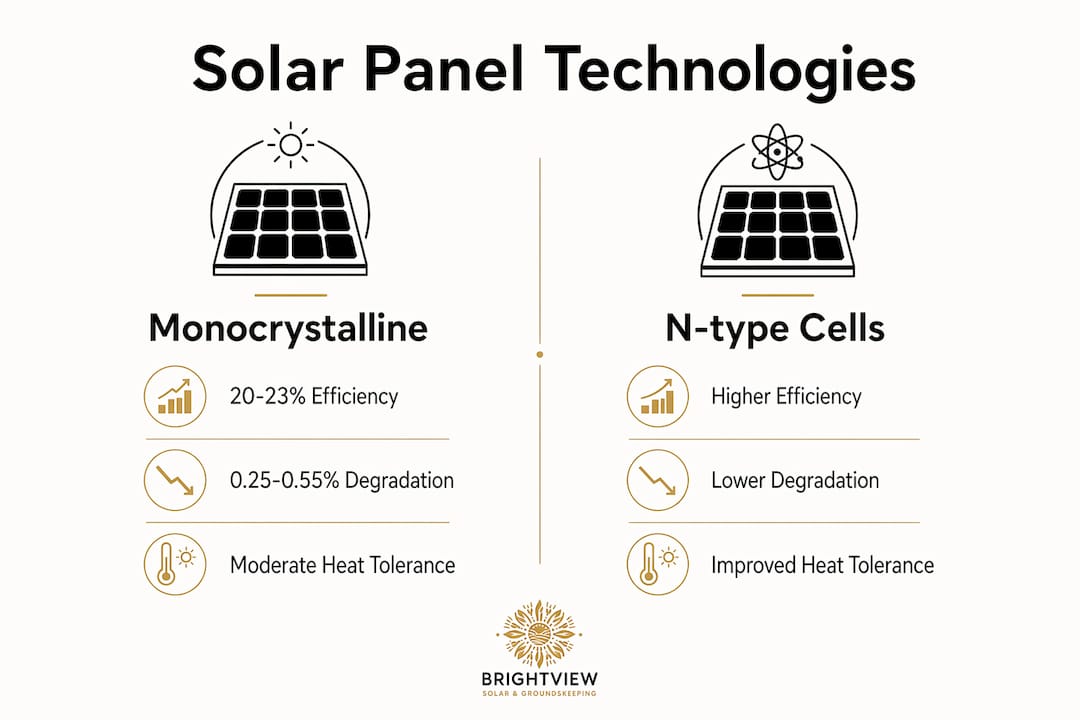
Monocrystalline panels deliver 20%–23% efficiency and are the standard choice for most Australian residential and commercial rooftops. They perform well in high-irradiance conditions and carry strong warranties. Polycrystalline panels sit at 16%–18% efficiency. They cost less per panel but require more roof space to generate the same output, which makes them a poor fit for smaller urban rooftops.
N-type solar cell technology is the most relevant advancement for Australian conditions. N-type cells maintain higher performance in intense heat and carry lower degradation rates than standard P-type monocrystalline panels. For a rooftop that will face 35°C+ summers for 25 years, that durability matters.
Degradation rate is the metric most buyers overlook. Panels degrade at 0.25%–0.55% annually, meaning a panel producing 400W today will produce less each year. Over a 25-year system life, the difference between a 0.25% and a 0.55% annual degradation rate adds up to a significant gap in total energy generated.
| Technology | Typical efficiency | Annual degradation | Heat tolerance | Best suited for |
|---|---|---|---|---|
| Monocrystalline (P-type) | 20%–23% | 0.35%–0.55% | Moderate | Most residential rooftops |
| Polycrystalline | 16%–18% | 0.40%–0.55% | Lower | Large unshaded commercial roofs |
| N-type monocrystalline | 21%–23%+ | 0.25%–0.35% | High | Hot climates, limited roof space |
Roof size and shading also drive the decision. High-efficiency panels above 22% are the right call for limited or shaded rooftops where every square metre counts. For large, unshaded commercial roofs, mid-range panels often deliver better value over time because the cost premium of high-efficiency panels does not return proportionally when space is not the constraint.
What cooling methods improve solar output in hot climates?
Cooling is the most direct way to recover efficiency lost to heat. Methods range from zero-cost passive approaches to engineered active systems, and the right choice depends on your installation scale and budget.
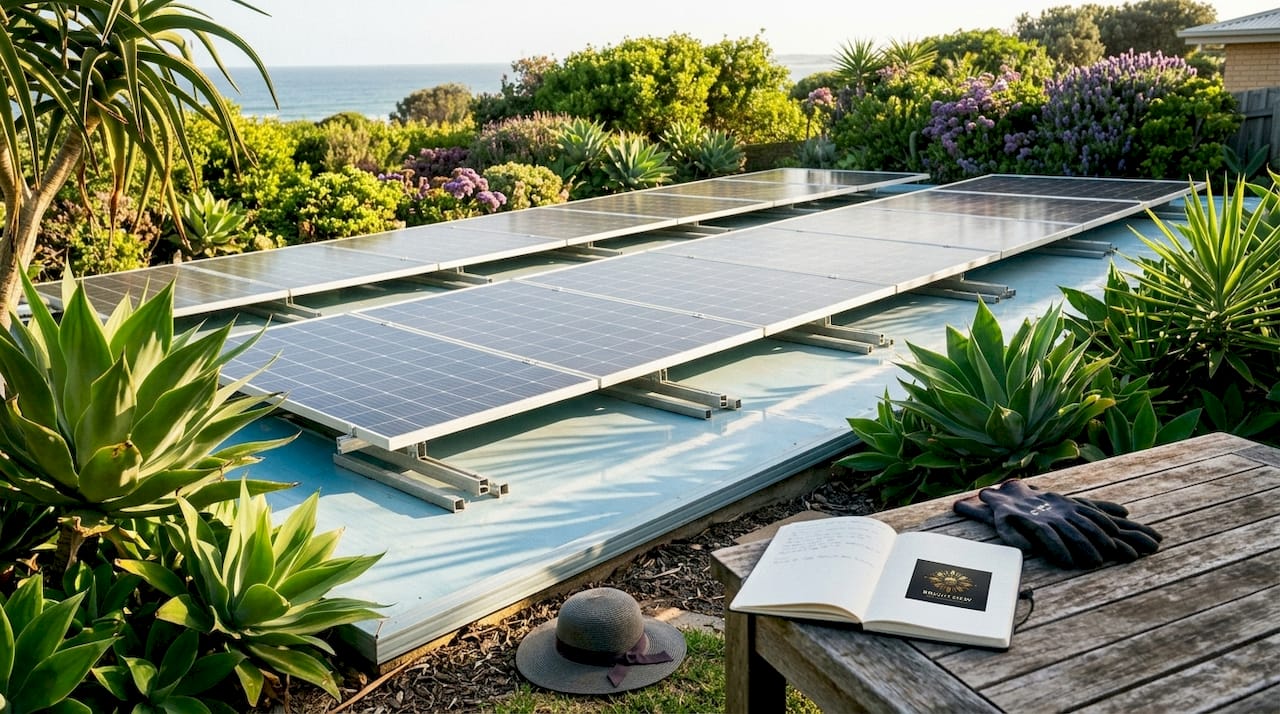
Passive cooling relies on design and airflow. Adequate mounting height, reflective roofing materials beneath the array, and natural convection can reduce panel temperatures by 10–15°C without any moving parts or ongoing costs. These gains are real and worth specifying at installation time.
Active cooling goes further. Water spray systems deliver the greatest temperature reductions under peak heat, directly improving output during the hours when demand is highest. Active cooling methods like water spray significantly improve panel output in hot climates, though they require a reliable water supply and regular maintenance. That operational cost makes them better suited to commercial or large-scale systems than to a typical suburban home.
Hybrid cooling systems combining passive and active methods reduce panel temperature by 18°C–26°C and raise electrical efficiency by over 10% in high-heat environments. That is a substantial gain for a commercial operator running a large array through an Australian summer.
One caution worth noting: passive shading strategies like glass frames can lower panel temperature, but glass-frame shading also reduces incoming irradiance, cutting net electrical output. Cooling the panel while blocking the sun is a trade-off that often produces no net benefit.
Pro Tip: For residential systems, prioritise passive cooling through correct mounting height and roof ventilation before considering active systems. The cost and maintenance of water-based cooling rarely makes financial sense below commercial scale.
Practical steps to maximise solar panel output
Getting the most from your solar investment comes down to decisions made at installation and habits maintained over the system’s life.
- Install north-facing at 20°–30° tilt. North-facing panels at a 20°–30° tilt maximise annual solar capture across most of Australia. Deviating from this without good reason costs you output every day.
- Specify airflow clearance. Confirm with your installer that panels will be mounted with adequate clearance beneath the frame. This single detail prevents years of heat-related underperformance.
- Clean panels regularly. Dust accumulation lowers power generation measurably, particularly in dry inland regions where rainfall does not rinse panels naturally. A clean panel is a more productive panel.
- Monitor system performance. Use your inverter’s monitoring app or a dedicated platform to track daily output against expected generation. A sudden drop often signals soiling, shading from a new obstruction, or a failing component.
- Check inverter efficiency. The inverter converts DC power from your panels into AC power for your home. An inverter operating at 95%+ efficiency loses far less energy than an older unit running at 90%.
- Consider AI-integrated controllers and advanced MPPT technology. These systems continuously adjust power extraction to match changing conditions, delivering measurable gains in commercial installations and increasingly in residential systems.
Pro Tip: Set a calendar reminder to check your monitoring data on the first day of each season. Seasonal comparisons reveal gradual degradation or soiling that daily checks can miss.
Key takeaways
Solar panel efficiency in Australia depends on temperature management, panel technology, and consistent maintenance far more than on chasing the highest lab efficiency rating.
| Point | Details |
|---|---|
| Temperature coefficient matters most | Choose panels with a coefficient below 0.40% per °C to protect output through Australian summers. |
| N-type cells suit hot climates | N-type monocrystalline panels offer superior heat tolerance and lower degradation for Australian conditions. |
| Passive cooling is free | Correct mounting height and airflow beneath panels reduce temperatures by 10–15°C at no ongoing cost. |
| Degradation compounds over decades | A 0.25% annual degradation rate produces significantly more energy over 25 years than a 0.55% rate. |
| Maintenance protects your investment | Regular cleaning and performance monitoring prevent gradual output losses from soiling and component wear. |
What I’ve learned about chasing efficiency in Australian conditions
Working with solar installations across Australian climates has taught me one consistent lesson: homeowners and businesses who focus on lab efficiency ratings often end up disappointed. The panel that looks best on a spec sheet is not always the panel that performs best on a corrugated iron roof in Townsville in january.
The temperature coefficient conversation is the one I find myself having most often. A buyer will come in excited about a panel rated at 23% efficiency, and I have to explain that its 0.60% temperature coefficient means it will underperform a 21% panel with a 0.32% coefficient through every hot Australian afternoon. That is not a minor detail. It is the difference between a system that meets projections and one that consistently falls short.
I also think the industry undersells maintenance. A dirty panel in a dusty inland region can lose output that no amount of premium technology recovers. Brightview Solar & Groundskeeping uses robotic cleaning systems precisely because consistent, thorough cleaning is the highest-return maintenance activity available to most system owners. The technology does not need to be complicated. It needs to be done regularly.
My honest advice: buy the best temperature coefficient you can afford, install with proper airflow, and clean the panels on a schedule. Those three things will do more for your long-term returns than any single technology upgrade.
— BrightView
How Brightview Solar & Groundskeeping helps you get more from your panels
Choosing the right panels is only part of the equation. Keeping them performing at their best over 25 years requires consistent maintenance and the right expertise for your specific site.

Brightview Solar & Groundskeeping delivers professional solar maintenance using robotic cleaning systems that remove dust and debris without damaging panel surfaces. The service is designed for both residential and commercial installations across Australia, with scheduling tailored to local conditions, whether that means monthly cleans in a dusty inland region or quarterly visits on a coastal property. If you want your system to deliver what it promised on day one, consistent professional maintenance is the most reliable path to getting there.
FAQ
What is a good solar panel efficiency rating in Australia?
Most Australian residential panels achieve 18%–23% efficiency under standard conditions. N-type monocrystalline panels at the upper end of that range offer the best performance for hot Australian climates.
How can I increase the efficiency of my solar panels?
Regular cleaning, correct installation tilt and orientation, adequate airflow beneath the panels, and performance monitoring are the most effective ways to maintain and improve real-world output.
Does heat reduce solar panel efficiency in Australia?
Yes. Panel output decreases 0.3%–0.65% for every 1°C above 25°C, and Australian rooftop surfaces can reach 60°C in summer, making heat management critical for maintaining rated performance.
Are high-efficiency panels always worth the extra cost?
Not always. High-efficiency panels above 22% justify their premium on limited or shaded rooftops. For large, unshaded commercial roofs, mid-range panels often deliver better value over the system’s lifetime.
How often should solar panels be cleaned in Australia?
Cleaning frequency depends on location. Dusty inland and agricultural areas benefit from monthly cleaning, while coastal or urban properties with regular rainfall may only need quarterly maintenance to prevent output losses from soiling.

