
Solar energy robotics is defined as the use of automated robotic systems to install, clean, inspect, and maintain solar panels at scale. These systems are no longer experimental. The AES Maximo robotic fleet has already installed 100 megawatts of solar capacity in real utility projects, and autonomous dry-cleaning robots now achieve cleaning efficiency greater than 99.5%. For Australian organisations managing solar infrastructure, these technologies represent a genuine shift in what is operationally possible. Brightview Solar & Groundskeeping works directly in this space, applying robotic systems to solar panel cleaning and site maintenance across Australia.
How solar energy robotics is changing panel installation
Robotic solar panel installation is the most visible application of solar robotics at utility scale. The AES Maximo system, developed by AES Corporation, operates as a collaborative robotic fleet that places panels with submillimetre accuracy using AI vision and both autonomous and supervised operation modes. That level of precision is not achievable consistently by hand across thousands of modules per day.
The installation speed gains are substantial. Maximo 3.0 units consistently exceeded one module installation per minute, achieving upwards of 24 modules per shift hour per person. That figure represents roughly double the output of manual installation methods. For a large solar farm project, that speed difference can compress build timelines by weeks.
Safety is the other major gain. Heat-tolerant robots maintain productivity during extreme heat events while reducing musculoskeletal injuries among workers. In Australian conditions, where summer temperatures on open solar sites regularly exceed 40°C, this is not a minor benefit. It is a direct reduction in worker injury risk and project delay.
Before field deployment, utility-scale robotic systems like Maximo undergo physics-based simulation and AI-driven modelling to refine their capabilities. That development rigour means the robots arriving on site are already tested against real-world variables, not just laboratory conditions.
Pro Tip: When evaluating robotic installation systems, ask vendors for field data on modules installed per shift hour, not just peak speed claims. Consistent throughput across a full shift is the metric that actually affects project timelines.
What technologies power autonomous solar panel cleaning robots?
Autonomous cleaning robots address one of the most persistent problems in solar farm operations: soiling. Dust, pollen, and bird droppings reduce panel output, and manual cleaning at scale is labour-intensive and inconsistent. Dry-cleaning robotic systems solve this without water, which matters enormously in arid Australian regions.
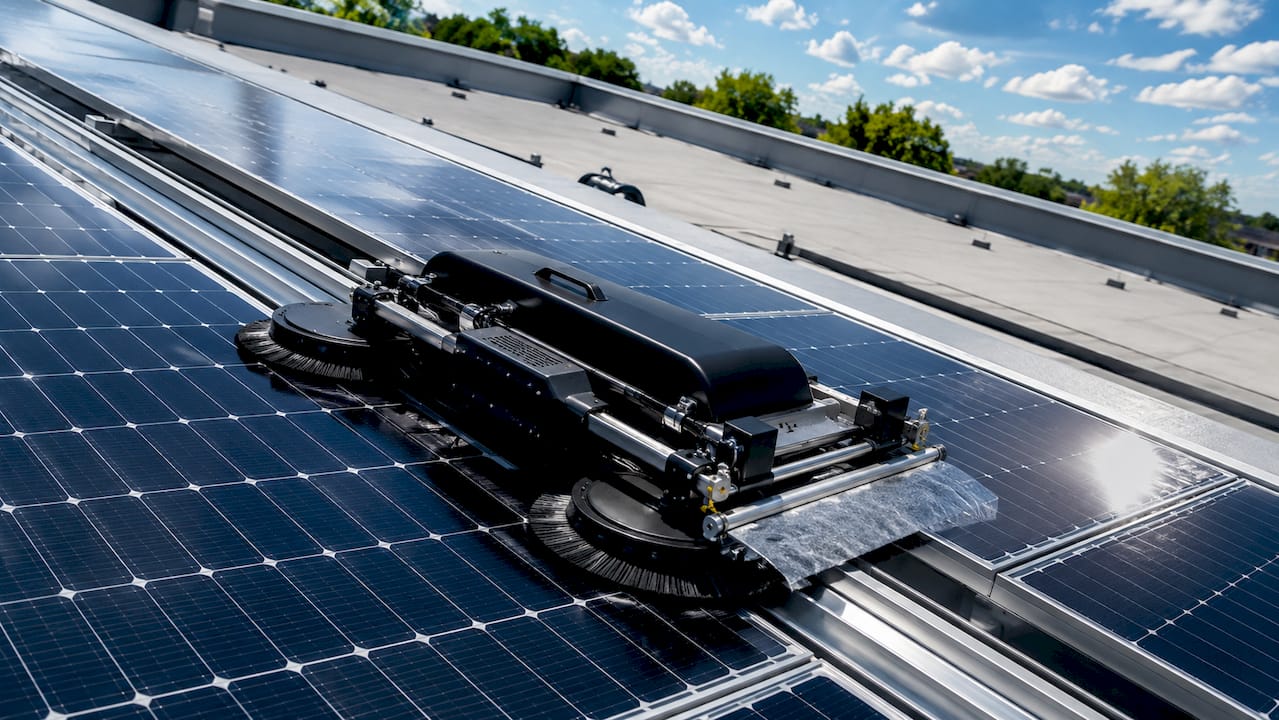
Arctech’s Star Shine I is a documented example of what current cleaning robots can do. It achieves cleaning efficiency greater than 99.5% and operates across a temperature range of -20°C to 60°C with high humidity tolerance. Its operating speed runs from 10 to 18 metres per minute, covering cleaning routes of up to 3 km per round trip. That operational envelope covers the full range of Australian climate conditions, from alpine sites to outback installations.
These robots integrate with solar tracking systems and connect to remote monitoring platforms via SCADA (Supervisory Control and Data Acquisition). SCADA integration means operators can schedule cleaning runs, review performance logs, and flag anomalies without sending a crew to site. That remote capability reduces both labour costs and response times.
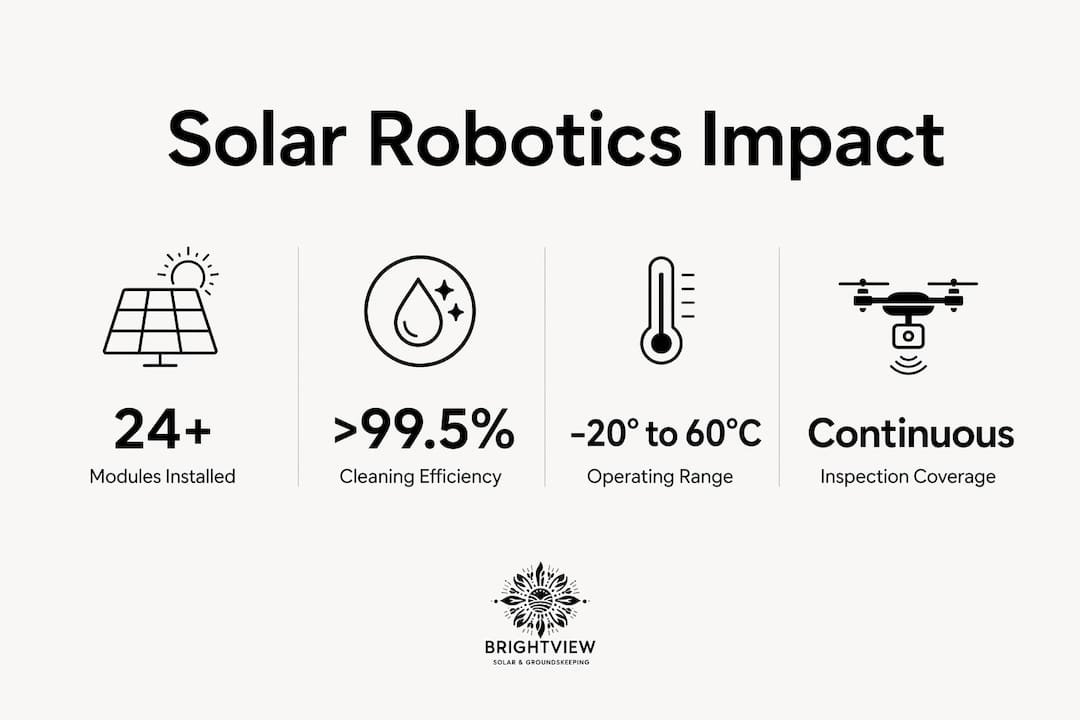
The table below summarises the key performance parameters of current autonomous cleaning robot technology:
| Parameter | Specification |
|---|---|
| Cleaning efficiency | Greater than 99.5% |
| Operating temperature range | -20°C to 60°C |
| Operating speed | 10–18 metres per minute |
| Maximum cleaning route | Up to 3 km round trip |
| Monitoring integration | SCADA and remote platforms |
Pro Tip: Schedule cleaning robot runs during early morning or late afternoon when panel temperatures are lower. This protects both the robot’s drive components and the panel surface coatings over the long term.
For organisations comparing solar panel cleaning robot providers, the key differentiators are temperature tolerance, route length, and SCADA compatibility with your existing monitoring infrastructure.
How does robotic inspection improve solar farm maintenance?
Robotic inspection systems give solar farm operators something manual site walks cannot: continuous, geolocated, and digitised records of site conditions. AI-driven robotic vision systems scan panels for faults including microcracks, hotspots, and soiling patterns, then log findings against a spatial map of the site. That map becomes a digital twin, a live record of the farm’s physical state.
The practical value of a digital twin is significant. Maintenance crews arrive on site knowing exactly which panels need attention and where they are located. That precision cuts the time spent on fault-finding and concentrates labour on actual repairs. It also creates a historical record that supports warranty claims and performance audits.
Robot-to-robot communication enables what engineers call synchronised heterogeneous fleet autonomy. In practice, this means inspection robots, cleaning robots, and installation robots can coordinate their movements across a site without colliding or duplicating effort. Australian solar farm projects are already using this capability in live deployments.
Key benefits of robotic inspection and monitoring include:
- Early fault detection. AI vision identifies hotspots and microcracks before they cause panel failure or fire risk.
- Geolocated fault records. Every fault is logged with spatial coordinates, so crews go directly to the affected panel.
- Digital twin creation. Ongoing mapping builds a site-wide record that supports long-term performance analysis.
- Remote operation capability. Operators can run inspection cycles from a control room, reducing site visit frequency.
- Synchronised fleet coordination. Multiple robot types share positional data to avoid conflicts and cover ground efficiently.
The terrain mapping that inspection robots perform also feeds back into navigation databases for cleaning and installation robots. Each robot type benefits from the spatial data collected by the others. That shared data architecture is what makes a coordinated robotic fleet more effective than any single robot operating alone.
What organisations need to know before deploying solar robotics onsite
Deploying robotic systems on a solar site is not a plug-and-play exercise. Site preparation determines whether robots perform reliably or spend half their time recovering from navigation errors. Organisations that skip this step consistently report lower throughput and higher maintenance costs on their robotic fleets.
The preparation steps that matter most are:
- Terrain clearing. Robots require clear paths free of debris, loose cable runs, and uneven ground. Even small obstacles can interrupt navigation and trigger safety stops.
- Spatial mapping. Site data must be loaded into the robot’s navigation system before deployment. This includes panel layout, row spacing, and any fixed infrastructure like inverter stations.
- Safety technician assignment. Human safety technicians must be present onsite during robot operation, similar to the supervision model used in early autonomous vehicle testing. This is a safety standard, not an optional extra.
- Workflow integration. Robotic schedules need to align with human crew activities to avoid conflicts. A cleaning robot running during a panel replacement job creates both safety risks and scheduling delays.
- Regulatory compliance review. Australian workplace health and safety regulations apply to robotic equipment on construction and maintenance sites. Confirm that your robotic system supplier has documented compliance with relevant standards before deployment.
Treating robots as collaborative team members rather than replacements for human crews produces better outcomes. The most effective deployments pair robotic throughput with human judgement for exception handling, quality checks, and unexpected site conditions.
Pro Tip: Run a full site mapping exercise at least two weeks before robotic deployment. Any changes to panel layout or site infrastructure after mapping will require a remap, which delays the start of productive robot operation.
The automation landscape for outdoor spaces is maturing rapidly, and solar sites are at the leading edge of that shift. Organisations that invest in proper site preparation now will have a significant operational advantage as robotic fleet capabilities continue to expand.
Key takeaways
Solar energy robotics delivers the greatest value when robotic systems, site preparation, and human supervision are treated as a single integrated operation rather than separate concerns.
| Point | Details |
|---|---|
| Installation speed doubles | Robotic fleets like AES Maximo achieve over 24 modules per shift hour per person, roughly twice the manual rate. |
| Cleaning efficiency exceeds 99.5% | Autonomous dry-cleaning robots maintain panel output in extreme temperatures without water use. |
| Digital twins improve maintenance | AI-driven inspection robots create geolocated site records that cut fault-finding time for crews. |
| Site preparation is non-negotiable | Terrain clearing and spatial mapping must happen before deployment for reliable robot navigation. |
| Human supervision remains required | Safety technicians must be onsite during robot operation to meet safety standards and manage exceptions. |
The shift I think most organisations are underestimating
The conversation about solar robotics tends to focus on speed and cost. Those gains are real, but the more significant shift is in workforce safety and the nature of the jobs being created. Robotics in solar installation expand job opportunities and accelerate skill development in AI and automation. That is a different story from the “robots replacing workers” narrative that dominates most coverage.
From where Brightview Solar & Groundskeeping sits, the organisations that will get the most from robotic solar systems are the ones that invest in their people at the same time. A safety technician who understands how a robotic fleet navigates and communicates is far more valuable than one who simply monitors a screen. The technology creates the need for a more skilled workforce, not a smaller one.
The next frontier is fleet autonomy at scale. As robot-to-robot communication matures and AI coordination improves, the gap between what a supervised robotic fleet can do and what a fully autonomous one can do will narrow. Australian solar farm operators who build their teams’ technical literacy now will be positioned to absorb that capability shift without disruption.
The organisations I’d caution are those treating robotic adoption as a procurement decision rather than an operational one. Buying the right robot is the easy part. Building the site preparation discipline, the safety protocols, and the human-robot workflow integration is where the real work happens. Get that right, and the speed and efficiency gains follow naturally.
— BrightView
Brightview Solar & Groundskeeping’s approach to solar robotics
Brightview Solar & Groundskeeping applies robotic systems directly to solar panel cleaning and site maintenance across Australia, combining autonomous technology with trained human crews for reliable, compliant operations.
Whether you manage a utility-scale solar farm or a commercial rooftop installation, the right robotic cleaning and maintenance approach depends on your site’s specific conditions. Brightview Solar & Groundskeeping’s team can assess your site and recommend a robotic service model that fits your panel layout, climate zone, and maintenance schedule. Explore the top solar panel cleaning robots Brightview recommends for Australian conditions, or visit Brightview Solar & Groundskeeping to discuss a tailored robotic maintenance programme for your site.
FAQ
What is solar energy robotics?
Solar energy robotics refers to automated robotic systems used to install, clean, inspect, and maintain solar panels. These systems operate autonomously or under human supervision to improve efficiency and reduce physical risk to workers.
How fast can robotic systems install solar panels?
The AES Maximo robotic fleet achieves over 24 modules per shift hour per person, with individual units exceeding one module per minute. That rate is roughly double the output of manual installation methods.
Do solar cleaning robots work in Australian conditions?
Current autonomous dry-cleaning robots operate across a temperature range of -20°C to 60°C with high humidity tolerance, covering the full range of Australian climate conditions from alpine to outback sites.
Is human supervision still required when using solar robots?
Safety technicians must be present onsite during robot operation to comply with safety standards and manage unexpected situations. Robots and human crews work as a coordinated team, not as independent systems.
What site preparation does robotic solar deployment require?
Sites require terrain clearing, spatial mapping of panel layouts, and integration of site data into the robot’s navigation system before deployment. Skipping this preparation leads to navigation errors and reduced robot throughput.

